
Concrete Resurfacing vs. Replacement: Save your Money Before the Holiday Rush
As the holiday season approaches, homeowners across Sarasota, Bradenton, Lakewood Ranch, and surrounding Florida communities begin preparing their homes for family gatherings, seasonal visitors, and outdoor entertaining.
While decorations, landscaping, and home maintenance often take priority, one important area is easy to overlook: your concrete surfaces.
Cracked driveways, stained patios, deteriorating walkways, and worn pool decks can affect more than your property's appearance. Depending on their condition, they may create uneven walking surfaces, drainage problems, and ongoing maintenance expenses.
If your concrete has seen better days, you may be wondering whether concrete resurfacing or complete replacement is the better investment.
The answer depends on your concrete's structural condition, the type of damage, your budget, and how quickly you need the project completed.
For many Florida homeowners, resurfacing offers a practical way to restore existing concrete without the expense and disruption of full demolition. However, replacement may be necessary when the underlying slab has significant structural problems.
In this guide, we'll compare concrete resurfacing vs. replacement, explain the typical costs and timelines, and help you determine which solution makes the most sense for your Florida property before the holiday season.
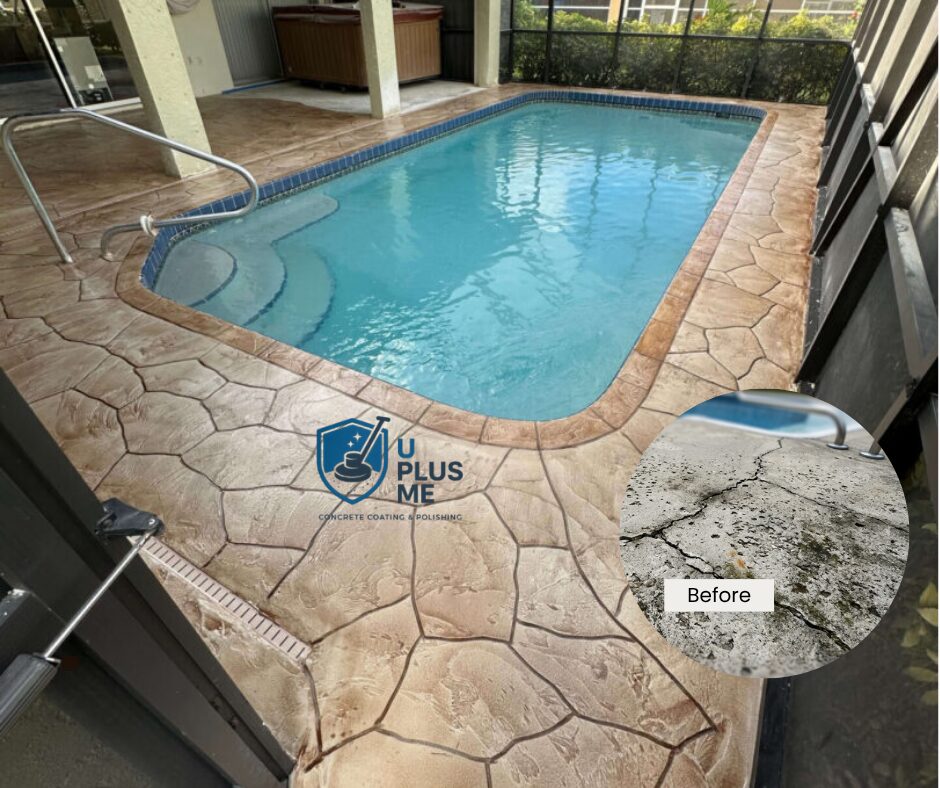
Assessing existing concrete helps determine whether resurfacing or replacement is appropriate.
Concrete Resurfacing vs. Replacement: What's the Difference?
Concrete resurfacing restores the appearance and usability of an existing structurally sound slab, while concrete replacement removes the existing concrete and installs a new slab.
Resurfacing is generally more economical and less disruptive because it preserves the existing concrete. Replacement requires more extensive work but can address significant deterioration, unsuitable slab conditions, and underlying structural problems.
The most important consideration is whether your current concrete can provide a stable foundation for the proposed resurfacing system.
What Is Concrete Resurfacing?
Concrete resurfacing involves preparing an existing concrete surface and applying a compatible overlay or coating system.
Depending on the condition of the slab and the desired finish, the process may include surface grinding, crack repair, moisture testing, and application of specialized resurfacing materials.
Common options include:
- Decorative concrete overlays: Restore worn surfaces while offering customizable textures and colors.
- Textured pool deck coatings: Improve the appearance and traction of poolside concrete.
- Stamped concrete overlays: Create decorative finishes inspired by stone, brick, or other patterns.
- Polymer-modified cementitious systems: Provide a bonded resurfacing layer over suitable existing concrete.
- Protective coating systems: Help protect prepared concrete surfaces from wear, staining, and environmental exposure.
At U Plus Me LLC, concrete resurfacing solutions are available for driveways, pool decks, patios, walkways, and other suitable surfaces throughout Sarasota and Manatee County. Homeowners can also explore our dedicated driveway and pool deck resurfacing services in Sarasota and Bradenton.
Resurfacing does not automatically correct structural problems. The underlying slab must be evaluated before selecting a system.
What Is Concrete Replacement?
Concrete replacement involves demolishing the existing slab, removing debris, evaluating and preparing the underlying base, installing new concrete, and allowing it to cure.
Replacement may also require adjustments to grading, drainage, reinforcement, and expansion or control joint planning.
Although more labor-intensive, replacement provides an opportunity to address conditions that a surface overlay cannot resolve.
It is often the appropriate solution when concrete has substantial movement, severe deterioration, or structural damage.
Concrete Resurfacing vs. Replacement: Side-by-Side Comparison
| Factor | Concrete Resurfacing | Concrete Replacement |
|---|---|---|
| Initial cost | Usually lower | Usually higher |
| Project timeline | Often a few days | Several days of work plus curing |
| Demolition | Usually unnecessary | Required |
| Structural repairs | Limited to compatible repairs | Can address major slab and base problems |
| Decorative options | Multiple textures, colors, and finishes | Traditional and decorative concrete finishes |
| Disruption | Generally minimal | More extensive |
| Maintenance | Depends on overlay or coating system | Depends on finish, sealing, and exposure |
| Best application | Stable concrete with cosmetic or surface damage | Severely damaged, unstable, or unsuitable concrete |
| Existing landscaping | Usually less disturbance | Greater potential disturbance |
| Long-term performance | Depends heavily on substrate and installation | Depends on base preparation, drainage, design, and installation |
The bottom line: If your concrete is structurally stable, resurfacing may deliver the improvement you need at a lower cost and with less disruption. If the slab is failing, replacement may provide better long-term value.
How Much Does Concrete Resurfacing Cost Compared to Replacement in Florida?
Concrete resurfacing is generally less expensive than full concrete replacement in Sarasota and Bradenton because it avoids demolition, debris removal, and installation of an entirely new slab.
However, the final cost depends on surface condition, square footage, preparation requirements, materials, and the decorative finish selected.
Typical Concrete Resurfacing Costs
For Sarasota and Bradenton homeowners, U Plus Me's published project guidance lists the following indicative price ranges:
| Resurfacing system | Indicative cost per sq. ft. |
|---|---|
| Spray texture and acrylic coatings | $4–$8 |
| Decorative stamped overlays | $6–$12 |
| Polyaspartic coating systems | $8–$15 |
These ranges are planning estimates, not guaranteed prices. Some projects may fall outside them due to concrete preparation, moisture conditions, repairs, or finishing requirements.
What About Concrete Replacement Costs?
Complete replacement generally has a higher overall project cost because it can include:
- Breaking and removing the existing concrete.
- Hauling and disposing of demolition debris.
- Excavating or correcting the base.
- Installing forms and any required reinforcement.
- Pouring and finishing new concrete.
- Addressing drainage or grading issues.
- Allowing sufficient curing and protecting the new installation.
For a meaningful comparison, homeowners should request written, itemized estimates that account for the same surface area, intended use, and finished appearance.
Example: Resurfacing a 500-Square-Foot Concrete Area
Based on the indicative resurfacing ranges above:
| Resurfacing type | Estimated cost for 500 sq. ft. |
|---|---|
| Spray texture or acrylic coating | $2,000–$4,000 |
| Decorative stamped overlay | $3,000–$6,000 |
| Polyaspartic coating system | $4,000–$7,500 |
These calculations illustrate surface-area pricing only. Minimum project charges, extensive repairs, special preparation, and additional services may affect the actual estimate.
A professional site assessment is essential before making a final budget decision.
When Is Concrete Resurfacing the Better Option?
Concrete resurfacing is usually the better option when the slab is structurally sound and the damage is primarily cosmetic or limited to repairable surface deterioration.
Common situations include the following.
1. Your Driveway Looks Worn but Remains Stable
Driveways naturally accumulate tire marks, stains, faded finishes, and surface wear.
If your driveway remains level, stable, and free from major structural deterioration, resurfacing may restore its appearance without the need to remove the existing concrete.
Decorative resurfacing can also complement your home's exterior colors and landscaping.
2. Your Pool Deck Has Lost Its Original Appearance
Pool decks in Florida experience constant exposure to sunshine, humidity, pool water, and frequent foot traffic.
Over time, their original finishes may fade, become stained, or show surface wear.
A properly selected pool deck resurfacing system can refresh the area with a decorative texture designed for wet environments.
For poolside applications, selecting an appropriate slip-resistant finish is particularly important. Learn more about pool deck resurfacing options in Sarasota, including textured finishes for outdoor pool areas.
3. Your Patio Needs an Updated Look
Outdoor patios are important gathering spaces, especially during the holidays.
If your patio's existing concrete is structurally sound but visually outdated, resurfacing can create a more attractive space for dining, relaxing, or entertaining.
Depending on the system, you may be able to select custom colors, textured finishes, or decorative patterns.
4. The Concrete Has Minor, Stable Cracks
Some superficial cracks can be repaired before resurfacing.
However, crack treatment must be appropriate for the cause and severity of the damage.
A resurfacing overlay cannot guarantee that a previously repaired crack will never reappear, particularly if the underlying concrete continues to move.
5. You Want to Avoid Unnecessary Demolition
Removing otherwise serviceable concrete creates debris, requires additional equipment, and can disturb surrounding areas.
By retaining an appropriate existing slab, resurfacing often reduces demolition waste and the amount of new material needed.
This makes it worth considering when the existing concrete remains in good structural condition.
When Should You Replace Concrete Instead of Resurfacing It?
Concrete replacement is generally the better choice when the existing slab has significant structural deterioration, ongoing movement, or damage that cannot be reliably corrected with localized repairs.
Watch for these warning signs.
Large or Widening Cracks
Deep cracks, especially those accompanied by vertical displacement, can indicate movement or problems beneath the slab.
Applying a decorative overlay without addressing the underlying issue may lead to recurring damage.
Sunken or Uneven Concrete
Slabs that have settled, tilted, or shifted may indicate inadequate soil support, erosion, or base problems.
In some situations, professional slab stabilization or leveling may be an alternative. However, severely compromised concrete may need replacement.
Persistent Drainage Problems
Pooling water near a driveway, walkway, or patio can indicate an improper slope or settlement.
A thin resurfacing system generally cannot correct major drainage or grading problems.
These conditions should be evaluated before determining whether resurfacing, leveling, drainage work, or replacement is appropriate.
Severe Crumbling or Delamination
If large portions of the existing concrete are breaking apart, an overlay may not have a sufficiently stable substrate for reliable adhesion.
The extent and depth of deterioration will determine whether repairs are practical or whether replacement is necessary.
Repeated Repairs That Keep Failing
If the same cracks, lifted areas, or deteriorating sections return after multiple repairs, the underlying cause may still be present.
Rather than repeatedly treating the surface, a more comprehensive assessment may reveal a longer-lasting solution.
Why Florida's Climate Matters When Choosing a Concrete Solution
Concrete in Sarasota, Bradenton, and other Gulf Coast communities faces different environmental conditions than concrete in colder northern states.
Although Florida homeowners generally do not experience the same repeated freeze-thaw cycles common in northern climates, local concrete surfaces face other challenges.
High Humidity and Moisture Exposure
Florida's humidity and frequent rain can affect concrete preparation, coating adhesion, and curing conditions.
Concrete is porous, and moisture can move through a slab even when the visible surface appears dry.
For certain coating systems, excessive moisture vapor transmission may contribute to blistering, peeling, or bond failure.
Professional installers may recommend moisture testing before selecting a coating or resurfacing system. The American Concrete Institute explains the importance of inspecting concrete and preparing the surface before applying protection systems in its guidance on concrete assessment and surface preparation.
Strong Sunlight and UV Exposure
Outdoor concrete receives substantial sunlight throughout the year.
Some coating materials may discolor, chalk, or degrade with prolonged ultraviolet exposure.
For uncovered driveways, patios, and pool decks, the coating system should be selected with outdoor UV performance in mind.
Heavy Seasonal Rainfall
Florida's rainy season can complicate installation schedules.
Applying materials under unsuitable moisture or weather conditions can affect performance.
Contractors must follow manufacturer requirements regarding surface moisture, temperature, weather exposure, and curing.
Coastal Salt Exposure
Properties near the Gulf Coast may experience salt spray and salt-containing moisture.
Salt exposure can contribute to staining and deterioration, especially when it reaches embedded steel through cracks or porous concrete.
Proper drainage, suitable materials, and ongoing maintenance are important for coastal applications.
Pool Chemicals and Frequent Wet Use
Pool decks are exposed to chlorinated water, cleaning products, standing moisture, and frequent barefoot traffic.
The selected surface should balance durability, cleaning requirements, traction, and comfort.
In Florida, the best concrete resurfacing system is not necessarily the most expensive option. It is the system best matched to the condition of the slab and the environment in which it will be used.
How Long Does Concrete Resurfacing Take Compared to Replacement?
Many residential resurfacing projects can be completed within a few working days, while concrete replacement generally requires a longer process involving demolition, installation, and curing.
These are general planning expectations, not guaranteed completion times.
Typical Resurfacing Process
Step 1: Concrete inspection
The contractor evaluates surface condition, cracking, existing coatings, moisture concerns, drainage, and overall suitability.
Step 2: Surface preparation
The surface is cleaned and mechanically prepared as required to create the proper profile for adhesion.
Step 3: Repairs and treatment
Suitable cracks, pits, and damaged areas are repaired. Any required moisture mitigation or compatible primer is installed.
Step 4: Resurfacing application
The chosen overlay or coating system is applied according to its installation requirements.
Step 5: Finishing and curing
Texture, decorative finishes, and protective topcoats are completed. The surface must achieve the required cure before being placed back into service.
Typical Concrete Replacement Process
Concrete replacement may include demolition, debris removal, excavation, base preparation, forming, pouring, finishing, joint installation, and curing.
While certain new slabs may support carefully controlled foot traffic after an initial curing period, full concrete strength development generally takes substantially longer.
For conventional concrete, 28 days is a commonly used benchmark for specified compressive strength, although actual curing, loading, and service requirements vary.
Can You Finish Before Thanksgiving or Christmas?
Possibly, depending on the scope of work, weather, material requirements, and contractor availability.
For homeowners planning holiday gatherings, the most important question is not simply when installation will be completed.
It is when the surface will be ready for its intended use.
A finished driveway may still require additional time before vehicle traffic is permitted. A newly resurfaced patio may need protection from furniture placement, cleaning, or standing water during its early curing period.
Confirm the required return-to-service timeline before scheduling holiday activities.
Which Concrete Areas Benefit Most From Resurfacing?
Different spaces require different performance characteristics.
Driveway Resurfacing in Sarasota and Bradenton
Driveways should be evaluated for regular vehicle traffic, tire exposure, slope, drainage, and existing structural damage.
The selected system must be approved for the intended loading and outdoor exposure.
When the existing driveway is stable, resurfacing can be an alternative to complete replacement.
Pool Deck Resurfacing in Florida
Pool decks require special attention to traction, water exposure, surface temperature, and maintenance.
Decorative textured finishes can help provide a more comfortable and visually coordinated poolside environment.
No coating is completely slip-proof, so homeowners should discuss slip-resistance characteristics and appropriate maintenance with their contractor.
Patio Resurfacing for Holiday Entertaining
Patios are ideal candidates for decorative upgrades when the existing slab is sound.
Resurfacing can coordinate the patio with the exterior of the home, landscaping, and nearby pool areas.
For covered and uncovered patios, material selection should account for moisture, sunlight, and intended use.
Walkway and Entryway Resurfacing
Walkways and entrances create an important first impression for visitors.
Resurfacing can improve worn finishes on stable concrete, but raised joints, displaced slabs, and significant trip hazards require proper correction before decorative work begins.
How Long Does Resurfaced Concrete Last in Florida?
Professionally installed concrete resurfacing can provide many years of service, but there is no universal lifespan that applies to every system or property.
Durability depends on several factors.
Existing Slab Condition
An overlay depends on the stability of the underlying concrete.
If the slab continues to settle or crack, resurfacing materials can be affected.
Surface Preparation
Proper cleaning, surface profiling, and repairs are essential for reliable performance.
Poor preparation can shorten service life even when premium materials are used.
Material Compatibility
Not every coating is suitable for every concrete surface.
Products should be selected according to the substrate, location, expected traffic, moisture conditions, and exposure.
Installation Conditions
Temperature, humidity, surface moisture, and application thickness can affect installation quality.
Manufacturer requirements should guide the process.
Maintenance Practices
Routine cleaning and timely treatment of damage help preserve the finish.
Some systems require periodic resealing or recoating, while others follow different maintenance schedules.
When comparing resurfacing and replacement, ask contractors about expected performance, maintenance obligations, product warranties, and workmanship coverage.
Five Questions to Ask Before Hiring a Concrete Resurfacing Contractor
Before investing in a driveway, patio, or pool deck improvement, ask the following questions.
1. Is my existing concrete structurally suitable for resurfacing?
The contractor should inspect the slab and explain any conditions that could affect the project.
2. What preparation will be performed?
Ask about mechanical preparation, crack repair, removal of existing coatings, and moisture evaluation.
3. Which resurfacing materials do you recommend for Florida's climate?
The recommendation should account for UV exposure, humidity, wet conditions, and the intended use of the surface.
4. When can I safely use the finished surface?
Request separate timelines for installation completion, foot traffic, furniture placement, and vehicle use where applicable.
5. What is included in the written estimate and warranty?
Compare surface preparation, repairs, materials, finish specifications, exclusions, and maintenance requirements.
Clear written answers make it easier to evaluate proposals and avoid unexpected costs.
Why Fall Is a Smart Time for Concrete Resurfacing in Southwest Florida
Fall can provide a useful opportunity to plan exterior concrete improvements in Sarasota and Bradenton.
Unlike colder regions where winter weather may severely restrict outdoor concrete work, Southwest Florida often experiences milder temperatures during the late-fall and winter months.
However, weather conditions must still meet the requirements of the selected product.
Here are several reasons to plan your project before the holidays.
Prepare Outdoor Spaces for Seasonal Visitors
Florida's pleasant fall and winter weather makes patios, outdoor kitchens, and pool areas popular gathering spaces.
Improving worn concrete before guests arrive can make these areas more inviting.
Coordinate the Project With Holiday Plans
Scheduling the work ahead of time helps you account for preparation, installation, curing, and any necessary furniture removal.
Address Surface Damage Before It Progresses
Evaluating cracks, drainage problems, and deteriorating finishes early may prevent additional damage or help identify problems requiring more extensive repairs.
Improve Your Home's Exterior Appearance
A refreshed driveway, walkway, or pool deck can complement landscaping, exterior paint, and other seasonal home improvements.
Avoid Last-Minute Scheduling Challenges
Project availability varies throughout the year.
Contacting contractors early gives homeowners more flexibility to compare proposals and plan around holiday activities.
How to Maintain Resurfaced Concrete After Installation
A concrete resurfacing project is an investment, and proper maintenance helps preserve its appearance and performance.
Clean surfaces regularly. Remove sand, dirt, leaves, and other debris before buildup becomes difficult to manage.
Address spills promptly. Oil, grease, pool chemicals, and other substances may stain or damage certain finishes.
Use compatible cleaning products. Follow the recommendations for your specific resurfacing or coating system.
Avoid aggressive pressure washing. Excessive pressure or improper nozzles may damage decorative textures or coatings.
Monitor drainage. Standing water can create maintenance and slip concerns. Persistent pooling should be evaluated.
Inspect for new damage. Cracks, peeling, or surface changes should be investigated rather than covered with additional material.
Follow recommended maintenance intervals. Some decorative overlays require periodic sealing or refinishing depending on wear and exposure.
A maintenance plan tailored to your installation is more reliable than a one-size-fits-all approach.
How to Decide Between Concrete Resurfacing and Replacement
Before making your decision, complete this checklist:
- Inspect your concrete for cracks, discoloration, scaling, and other visible damage.
- Identify any sections that have sunk, lifted, or moved.
- Look for persistent standing water or drainage issues.
- Determine whether the main concern is appearance, performance, or structural stability.
- Consider the required surface finish and level of traffic.
- Ask a qualified contractor to evaluate the existing slab.
- Request a written proposal explaining preparation and material specifications.
- Compare long-term maintenance requirements, not just initial project cost.
- Confirm curing and return-to-service requirements.
- Schedule the work with enough time before holiday activities.
If your concrete is structurally sound, resurfacing may be the more efficient choice. If the underlying slab is failing, replacement or another structural correction may be the more appropriate investment.
Concrete Resurfacing Services in Sarasota, Bradenton, and Surrounding Areas
U Plus Me LLC provides concrete resurfacing and decorative coating solutions for homeowners seeking to improve the appearance and functionality of existing concrete surfaces.
Our services include solutions for:
- Residential driveways
- Pool decks
- Outdoor patios
- Concrete walkways
- Garage floors
- Other suitable residential concrete surfaces
We work with homeowners throughout Sarasota, Bradenton, Lakewood Ranch, Palmetto, Venice, Siesta Key, Longboat Key, and surrounding Southwest Florida communities.
Every concrete surface has different requirements. The condition of the slab, environmental exposure, and intended use all influence the appropriate recommendation.
Our goal is to help homeowners understand their options and select a solution that makes sense for their property.
Frequently Asked Questions About Concrete Resurfacing vs. Replacement
Is concrete resurfacing cheaper than replacing concrete?
Yes, concrete resurfacing is generally less expensive than full replacement when the existing slab is structurally sound. Resurfacing avoids major demolition and reduces the need for new concrete, but actual savings depend on preparation, repairs, materials, and project size.
How much does concrete resurfacing cost in Sarasota, FL?
Concrete resurfacing in Sarasota may cost approximately $4–$15 per square foot depending on the system. Basic spray textures and acrylic coatings generally cost less than decorative stamped overlays or more complex polyaspartic systems. A property inspection is necessary for an accurate estimate.
Can badly cracked concrete be resurfaced?
Badly cracked concrete should not be resurfaced without first evaluating the cause and extent of the damage. Minor stable cracks may be repairable, while major structural cracking, slab displacement, or ongoing movement may require more extensive correction or replacement.
How long does concrete resurfacing take?
Many residential resurfacing projects take a few working days, depending on project size, surface preparation, repairs, and weather conditions. Additional curing time may be required before foot or vehicle traffic is allowed.
Is concrete resurfacing a good option for Florida driveways?
Yes, concrete resurfacing can be a good option for Florida driveways when the existing slab is stable and the selected system is suitable for vehicle traffic, UV exposure, moisture, and outdoor conditions.
Can you resurface a concrete pool deck without replacing it?
Yes, a structurally sound concrete pool deck can often be resurfaced without demolition. Decorative textured systems can improve the pool area's appearance and provide traction characteristics suited to wet conditions.
Will resurfacing cover existing concrete cracks permanently?
No, resurfacing cannot guarantee that existing cracks will never reappear. Stable cracks may be treated before application, but underlying movement can cause cracks to reflect through a new overlay.
Is fall a good time for concrete resurfacing in Florida?
Yes, fall can be a favorable time for concrete resurfacing in Southwest Florida because temperatures are often milder and homeowners can prepare outdoor areas for seasonal gatherings. Actual installation depends on rainfall, humidity, surface conditions, and product requirements.
How soon can I drive on a resurfaced concrete driveway?
The required waiting period depends on the resurfacing material, installation conditions, and manufacturer's instructions. Some systems allow vehicle traffic sooner than others. Your contractor should provide a specific return-to-service schedule.
Does concrete resurfacing increase home value?
Concrete resurfacing may improve curb appeal and make outdoor spaces more attractive to potential buyers. However, any effect on resale value depends on property condition, local market factors, installation quality, and buyer preferences.
Should I resurface or replace my concrete patio?
Resurfacing is often preferable when the patio slab is stable and its problems are primarily cosmetic. Replacement may be necessary if the concrete has extensive cracking, movement, major deterioration, or unsuitable drainage conditions.
Can concrete resurfacing be completed before Christmas?
Yes, some residential resurfacing projects can be completed before Christmas if scheduling, weather, surface condition, and curing requirements allow. Homeowners should arrange an assessment early and confirm when the finished area can safely be used.
Refresh Your Concrete Before the Holiday Rush With U Plus Me LLC
Your driveway, patio, walkway, or pool deck plays an important role in how your home looks and functions.
If your concrete is cracked, faded, or worn, you may not need to replace the entire surface to achieve a noticeable improvement.
With the right evaluation, professional preparation, and suitable materials, concrete resurfacing can offer a practical alternative to demolition.
At U Plus Me LLC, we help homeowners in Sarasota, Bradenton, Lakewood Ranch, and surrounding Florida communities explore concrete resurfacing and decorative finishing options. Visit our concrete coatings service page to learn about solutions for garages, driveways, pool decks, and other surfaces.
Whether you're preparing for holiday visitors, upgrading your outdoor entertaining space, or restoring a weathered driveway, our team can help you understand the available solutions.
Ready to find out whether resurfacing is right for your property?
Call U Plus Me LLC at (941) 269-3362 or request a free estimate today. You can also review our concrete resurfacing and overlay options before scheduling an evaluation.
Give your concrete surfaces a fresh start before the holiday celebrations begin.