
Why Your Pool Deck Gets Scorching Hot and How to Fix It in Bradenton, FL
On a mid-July afternoon in Bradenton, bare concrete, aging pool deck coatings, and dark decorative finishes can absorb and store enough solar heat to make the walk from the lanai to the pool painful.
Professional pool deck resurfacing with light-colored, heat-reflective, slip-resistant coating systems is one of the most effective ways to improve barefoot comfort while restoring the appearance of an older outdoor surface.
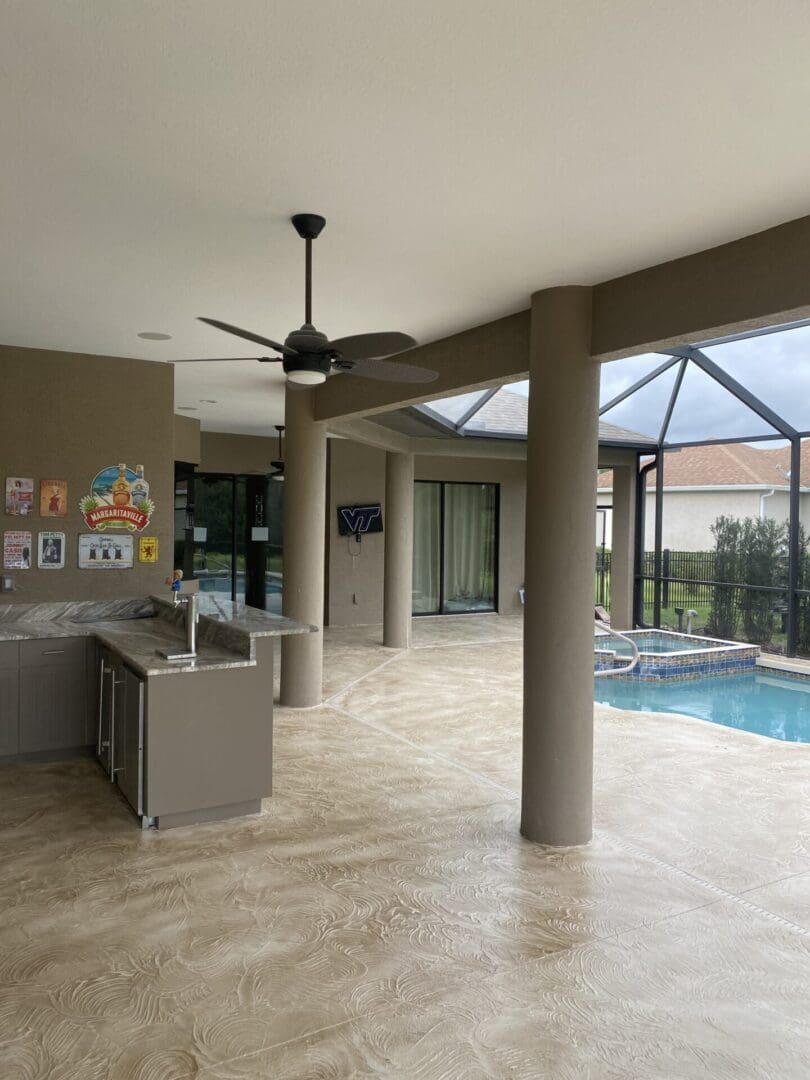
Why Pool Decks in Manatee County Become Unbearably Hot
Concrete is a dense thermal-mass material. In Bradenton, Palma Sola, Lakewood Ranch, River Strand, and Heritage Harbour, pool decks absorb direct solar radiation for hours and then release stored heat slowly, often staying warm long after the air temperature drops.
This heat problem is intensified by Florida Gulf Coast conditions: extreme UV exposure, frequent afternoon storms, high humidity, wide-open pool cages, and limited mature shade in many newer residential communities.
Horizontal concrete can bake under intense Florida sun for much of the day, especially in open pool cages.
Sudden afternoon downpours cool the surface rapidly, contributing to expansion, contraction, micro-cracking, and surface wear.
Many Lakewood Ranch and newer Manatee County homes have bright, open backyards with little natural canopy protection.
High humidity and screened enclosures reduce natural evaporative cooling, so the slab can feel hotter for longer.
Just How Hot Can Your Concrete Deck Get?
In Bradenton summer conditions, a standard concrete or dark-painted pool deck can become 25°F to 55°F hotter than the surrounding air. That is why a 90°F afternoon can produce a deck surface that feels painful within seconds of barefoot contact.
Bradenton Pool Deck Heat Range
Shareable surface temperature guide for bare concrete and dark-coated pool decks.
Free In-Home Thermal Evaluation in Bradenton
U Plus Me can measure your deck's exact temperature spikes using infrared surface thermometers and review the concrete condition before recommending a resurfacing system.
Warning Signs Your Deck Is Retaining Destructive Heat
Excessive heat absorption does more than hurt bare feet. It can accelerate coating failure, worsen surface cracking, expose weak prep work, and make the entire pool area less usable during the hours when families want to be outside.
Children refuse to walk around the pool without water shoes or flip-flops.
Pets actively avoid crossing the lanai, pool cage floor, or open deck surface.
The concrete remains noticeably warm to the touch long after sunset.
Dark paint or DIY coatings begin to bubble, peel, chalk, or crack under intense UV exposure.
White powder appears near coping or slab edges because of trapped moisture, salts, chlorine exposure, or vapor movement.
The pool area becomes difficult to enjoy between late morning and late afternoon.
The Solution: Heat-Reflective Coatings vs. Other Materials
Not all pool deck finishes handle the Florida sun the same way. The best systems for Bradenton homes combine light color, surface texture, UV-stable sealing, proper concrete preparation, and moisture vapor transmission awareness.
Cooler Pool Deck Material Comparison
Use this guide to compare heat retention, UV stability, and Florida moisture performance.
Case Study: Restoring Comfort in Lakewood Ranch, FL
A homeowner in a master-planned Lakewood Ranch community contacted U Plus Me because their 15-year-old bare concrete pool deck had become nearly unusable between 11:00 AM and 4:00 PM during summer. On typical July afternoons, the dark, weathered surface registered 142°F.
Professional Engineering Process
U Plus Me bypassed cheap acid-washing methods and performed heavy-duty diamond grinding across the surface to achieve an ICRI Concrete Surface Profile of CSP 2 to CSP 3.
Moisture vapor transmission levels were verified under 3 lbs per 1,000 sq. ft., reducing the risk of future coating delamination or bubbling.
The team installed a polymer-modified cementitious knockdown texture overlay sealed with a high-solids, UV-stable, heat-reflective architectural coating in a custom light sand finish.
What Happens During a Professional Pool Deck Resurfacing Project?
A professional pool deck resurfacing project should not begin with paint. It should begin with evaluation, moisture review, mechanical surface preparation, crack repair, texture selection, and coating compatibility for Florida UV, rain, humidity, and pool chemistry.
The slab is evaluated for moisture vapor transmission because excess moisture is one of the leading causes of coating failure in Florida.
Mechanical diamond grinding opens the concrete pores, removes contaminants, and creates the surface profile needed for strong adhesion.
Cracks, spalling, and surface imperfections are repaired before the decorative system is installed so defects do not telegraph through the finish.
A textured overlay or cool-deck system is applied to create a more attractive, slip-resistant, and heat-reflective surface.
The finished system is sealed with a UV-stable coating and allowed to cure according to product and site conditions.
How Much Does Pool Deck Resurfacing Cost in Bradenton?
Pool deck resurfacing in Bradenton and nearby Manatee County communities commonly ranges from about $6 to $18+ per square foot. The final price depends on the existing surface condition, coating removal, crack repair, moisture mitigation, texture, decorative finish, access, and total project size.
| Project Factor | How It Affects Cost |
|---|---|
| Existing coating removal | Failed paint, peeling epoxy, or thick old coatings require more grinding and labor. |
| Crack and spall repair | More surface restoration increases prep time before the overlay can be installed. |
| Moisture conditions | High MVT or drainage problems may require additional mitigation or system changes. |
| Texture and finish | Basic textures cost less than premium decorative patterns or multi-layer finishes. |
| Access and project size | Small or difficult-access pool cages can increase setup and staging complexity. |
Additional Ways to Keep Your Pool Deck Cooler
Resurfacing is often the biggest improvement, but combining it with shade, lighter color choices, landscaping, and surface texture can make a pool deck more comfortable during the hottest Bradenton afternoons.
Pergolas, shade sails, covered lanais, and retractable awnings can reduce direct solar exposure.
Light gray, beige, ivory, and coastal sand tones generally reflect more sunlight than dark coatings.
Strategic trees and landscape features can help reduce exposure during peak sun angles.
Modern decorative coatings can create a cooler and more comfortable walking surface than aging concrete.
Related Pool Deck Resources from U Plus Me
This article is focused on heat, barefoot comfort, and surface temperature reduction. For related but different pool deck problems, use these internal resources to compare moisture damage, resurfacing choices, and replacement decisions without mixing search intent.
- Pool Deck Resurfacing Services - How to Choose the Right Pool Deck Resurfacing Contractor Near You in Florida
- Pool Deck Failures in Sarasota - Pool Deck Resurfacing in Sarasota: What Homeowners Should Know Before Upgrading
- Pool Deck Resurfacing vs. Replacement in Bradenton - Best Slip-Resistant Flooring Options for Pool Areas in Clearwater & Bradenton, FL (7 Safe & Durable Choices)
- Revitalize Your Backyard Oasis: The Ultimate Guide to Pool Deck Resurfacing in Bradenton, FL
Why Professional Overlays Beat DIY Paint Kits
Cheap DIY concrete paint kits are thin coatings that often trap vapor beneath the slab. When Florida sun heats trapped moisture, the coating can blister, peel, fade, or delaminate within one or two seasons.
Professional architectural resurfacing systems are engineered for chlorine and saltwater splash exposure, foot traffic, patio furniture movement, hairline crack treatment, UV exposure, and moisture vapor transmission. Most residential pool deck transformation projects take about 3 to 5 days from prep to final cure, depending on site conditions.
Frequently Asked Questions
Does pool deck resurfacing really make the surface cooler?
Yes. Premium concrete overlays can use lighter colors, infrared-reflective pigments, and textured knockdown finishes that reduce heat absorption and limit the amount of hot surface touching bare feet. Results vary by shade, color, sun exposure, slab condition, and maintenance.
How much does pool deck resurfacing cost in Bradenton?
Pool deck resurfacing in Bradenton commonly ranges from about $6 to $18+ per square foot. Basic texture systems may fall near the lower end, while decorative overlays, failed coating removal, crack repair, moisture mitigation, and premium finishes can increase the final price.
What is the coolest color for a Florida pool deck?
Lighter coastal tones such as ivory, sand, light gray, and soft beige typically reflect more sunlight than terracotta, charcoal, brick red, or dark gray. For Bradenton homes, color selection should also account for glare, landscaping, screen enclosure shade, and the architectural style of the home.
How long does a professional cool-deck coating system last?
When the concrete is prepared correctly through mechanical diamond grinding, moisture is evaluated, and UV-stable products are maintained, a professional polymer-modified overlay system can often last 10 to 15+ years under standard residential pool deck use.
Can resurfacing fix a pool deck that is also cracked or stained?
Often, yes. Minor cracks, surface staining, discoloration, and worn texture can usually be addressed during preparation and resurfacing. Major settlement, structural movement, or severe slab failure may require replacement or more extensive concrete repair before a coating system is recommended.
Ready to Reclaim Your Backyard?
You do not have to sacrifice Florida summer afternoons to blistering hot concrete. U Plus Me specializes in concrete resurfacing, cool-deck overlays, and protective coating systems designed for Bradenton, Lakewood Ranch, Sarasota, and surrounding Gulf Coast communities.
Schedule a free on-site pool deck consultation and thermal inspection today.