
How to Choose the Right Coating for Screened-In Pool Decks in Florida
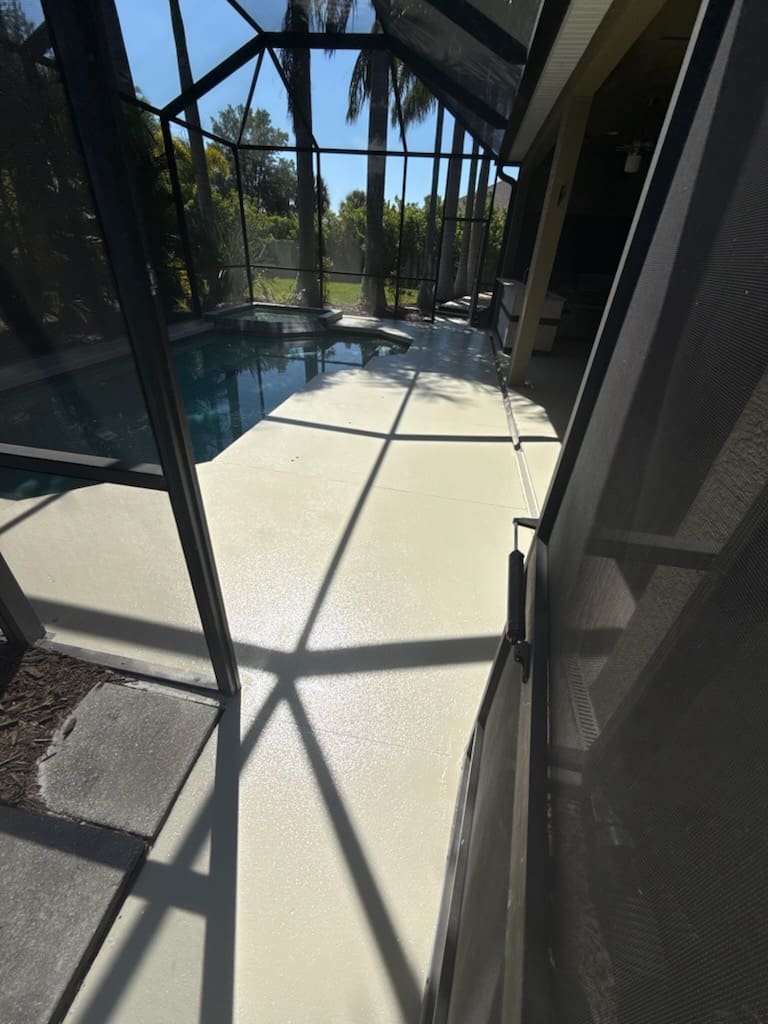
If you own a screened-in pool enclosure in Florida, your deck isn't just a surface—it's a high-traffic, high-moisture environment exposed to heat, humidity, chlorine, and constant use. Choosing the wrong coating can lead to slippery surfaces, peeling, and costly repairs. The right one transforms your space into a safe, stunning outdoor living area.
Why Screened-In Pool Decks in Florida Require Specialized Coatings
Florida creates a unique set of challenges for any outdoor surface. Even with a screen enclosure, your deck still faces heat buildup, moisture retention, and chemical exposure—and not all coatings perform equally.
High Humidity & Moisture
Florida's tropical climate means porous surfaces stay constantly wet, breeding mold and creating slip hazards.
Constant UV Exposure
Even screened enclosures allow significant sunlight. UV rays degrade cheap coatings, causing yellowing and flaking.
Chlorine & Chemical Contact
Chlorine, saltwater, and sunscreen oils break down low-grade coatings from the inside out.
01Key Factors to Consider Before Choosing a Coating
Before comparing materials, understand what actually matters for a long-lasting, safe result in the Florida climate.
Slip Resistance — Safety First
Pool decks are wet constantly. Look for textured finishes (silica sand, quartz, or flake systems) and anti-slip additives. Some coatings, like basic epoxy, become dangerously slippery unless modified.
UV Stability — Critical in Florida
Standard epoxy coatings are especially vulnerable to yellowing and degradation from UV rays. If your enclosure allows sunlight—and most do—UV resistance is non-negotiable.
Moisture & Chemical Resistance
A quality coating must seal the concrete and resist breakdown from chlorine, saltwater, sunscreen oils, and cleaning chemicals.
Heat Reflectivity
Light-colored acrylic and advanced systems reflect solar energy, keeping surface temperatures 10–30°F cooler than bare concrete—so you can walk barefoot in July.
Durability & Flexibility
Concrete expands and contracts with temperature changes. Rigid coatings crack over time. Flexible systems like polyurea resist cracking far better than traditional epoxy.
Cure Time — Downtime Matters
Epoxy requires 3–5 days before full use. Polyurea and polyaspartic systems are often ready in 24 hours or less—ideal for minimizing disruption.
02Types of Pool Deck Coatings — And Which One Is Best
Here's a clear breakdown of the most common options, so you can make the right decision for your Florida pool deck.
Polyurea / Polyaspartic
Epoxy Coatings
Acrylic Coatings
Paint & DIY Sealers
Quick Comparison
| Coating Type | UV Resistance | Slip Safety | Durability | Cure Time |
|---|---|---|---|---|
| Polyurea / Polyaspartic | Excellent | Excellent | 10–20 yrs | 24 hrs |
| Epoxy | Poor | Moderate | 5–10 yrs | 3–5 days |
| Acrylic | Moderate | Moderate | 3–7 yrs | 24–48 hrs |
| Paint / DIY Sealer | Very Poor | Dangerous | 1–3 yrs | Varies |
03Understanding Coating Systems — Where Most People Get It Wrong
The biggest mistake homeowners make is focusing on the material instead of the system. A high-performance pool deck coating isn't just one product—it's a carefully layered approach that delivers slip resistance, longevity, and visual appeal together.
A professional multi-layer system outperforms any single-coat solution. Here's what a premium Florida pool deck system looks like:
Moisture Vapor Barrier (MVB)
Prevents moisture migrating up through the slab from breaking down the coating from below — critical in Florida's high water-table environment.
Polyurea Base Coat
Bonds directly to concrete, creating a flexible, chemical-resistant foundation that moves with the slab rather than cracking against it.
Silica Sand or Quartz Broadcast
Embedded aggregate creates the slip-resistant texture that makes this system safe for wet, barefoot use — even for kids running around the pool.
Polyurea Intermediate Layer
Locks in the aggregate, seals the texture, and adds another level of waterproofing and chemical resistance.
Polyaspartic Topcoat
The UV-stable finishing layer that protects color, adds gloss or matte sheen, and delivers the long-term durability that single coats can't match.
04Real-World Case Studies: Before vs. After
These examples from Florida homeowners show exactly how the right (and wrong) coating choices play out in practice.
Case Study 1: Cracked & Slippery Pool Deck
❌ The Problem
- Bare concrete deck with visible cracks
- Extremely slippery surface when wet
- Discoloration and heat buildup
✅ The Solution
- Installed polyurea + quartz broadcast system
- Slip-resistant texture — safe for children
- Flexible coating bridges existing cracks
- Cooler surface, modern decorative finish
Case Study 2: Fading Epoxy Deck in Screened Enclosure
❌ What Went Wrong
- Existing epoxy coating turned yellow within 2 years
- Peeling and lifting near pool edges
- Uneven, patchy finish throughout
- Epoxy alone lacks outdoor UV stability
✅ The Fix
- Removed failing epoxy coating entirely
- Installed full polyaspartic topcoat system
- UV-stable finish with even color retention
- Significantly longer expected lifespan
05Common Mistakes to Avoid
These are the errors we see again and again — each one leads to premature failure, safety risks, or unnecessary expense.
Choosing Based on Price Alone
Cheap coatings mean expensive repairs in 2–3 years. A quality system pays for itself in longevity and avoided repairs.
Ignoring Slip Resistance
Safety is never optional on a pool deck. A beautiful but slippery surface is a liability — especially with kids and elderly guests.
Using Indoor Products Outdoors
Many widely marketed coatings are not designed for Florida's UV intensity. They fail faster than a product rated for exterior use.
Hiring Inexperienced Installers
Even the best materials fail with poor surface preparation or incorrect application. Multi-layer systems require trained professionals.
06How to Choose the Right Contractor
Even the best coating system can fail if installed incorrectly. When evaluating contractors for your Florida pool deck, look for these qualifications:
Florida Experience
Proven track record with Florida pool decks — not just general concrete work. Local climate knowledge matters.
Multi-Layer Expertise
Contractors who install single-coat systems are not equipped for high-performance results. Ask about their full system approach.
Warranty-Backed Work
A contractor confident in their work will stand behind it. Ask what's covered and for how long before signing anything.
07Final Recommendation: What Actually Works in Florida
If you want a coating that truly performs in Florida's climate, the answer is clear:
Go with a polyurea / polyaspartic system with a textured aggregate layer. It offers the best combination of safety, durability, UV resistance, and aesthetics — and most importantly, it lasts.
Whether your deck is cracked, slippery, faded, or just outdated, the right system can transform it into a safe, beautiful, long-lasting outdoor space you'll be proud to show off at every pool party.
Ready to Upgrade Your Pool Deck?
At U Plus Me LLC, we specialize in high-performance pool deck coating systems designed specifically for Florida conditions. Contact us today for a free consultation and see what's possible.
Phone: 941-269-3362
Service Areas: Bradenton, Sarasota, Lakewood Ranch, Venice, Tampa, and surrounding areas.
08Frequently Asked Questions
Everything you need to know before choosing a coating for your Florida pool deck.
Contact U Plus Me LLC Today
Ready for your free estimate? Our specialists will assess your surface and recommend the best system for your Florida pool deck — no obligation.
Schedule Your Free ConsultationService Areas: Bradenton, Sarasota, Venice, Lakewood Ranch, Tampa & Surrounding Areas
Phone: 941-269-3362